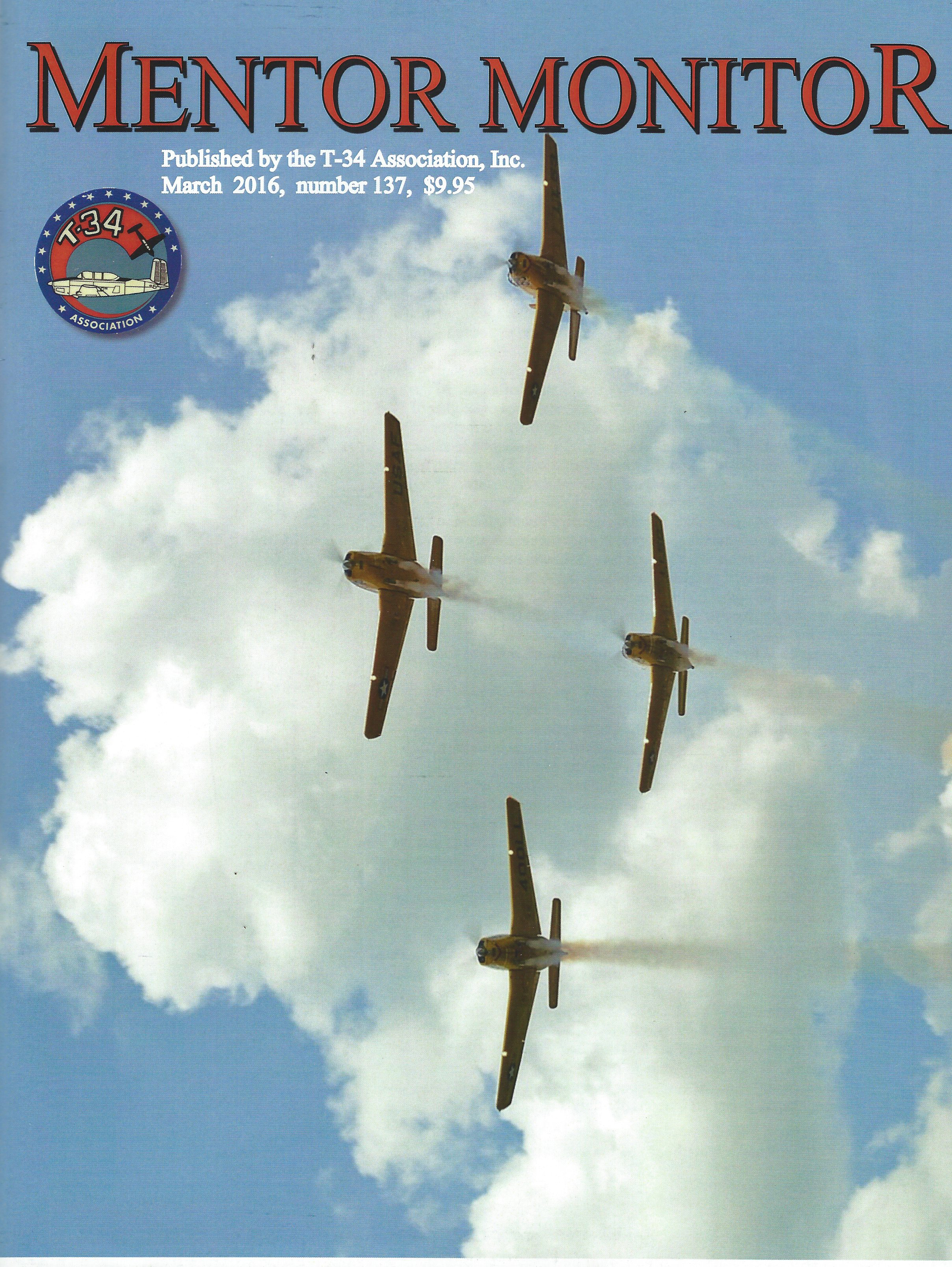
THE BEECH T-34 MENTOR

T-34_print.JPG (40363 bytes)The Mentor was the brainchild of Walter Beech, who saw the need for a less expensive and easier-to-fly trainer than the North American AT-6/SNJ, which both the U.S. Navy and Air Force were using for primary training in the 1940's.

Beech developed the Mentor as a private venture and was able to sell it to the services, who began using T-34’s in 1953. Mentors were built by Beechcraft from 1953 until 1958. The USAF phased their Mentors out of service in the early 1960’s, in favor of all-jet trainers. The Navy used their initial batch of Mentors until the mid 1970’s. They were retired when the Navy bought the T-34C, a heavier version of the Mentor which is powered by the Pratt & Whitney PT-6A turboprop engine.

Early model Mentors were also license-built in foreign countries, including Canada, Japan, and Argentina. Japan is still building a much-modernized turbine-powered version of the original Mentor design. There are about 200 Mentors in civilian hands in the United States. Most of these are retired veterans of either the Air Force or Navy, but some have been imported from countries which acquired their Mentors from Japan, or from the US Military Assistance program.

mentor.jpg (22500 bytes)The T-34 has become one of the most sought-after civilian warbirds because of it’s relatively economical operation and it’s fine flying qualities.

T-34 A/B SPECIFICATIONS

Dimensions:

Wingspan 32 feet 8 inches
Length 25 feet 9 inches
Height 9 feet 6 inches
Empty Weight 2,250 pounds
Maximum Weight 2,950 pounds
Powerplant Continental IO-520 285hp

Performance:

Maximum Speed 214 knots
Cruise Speed 165 knots
Service Ceiling 20,000 ft
Range 540 miles
Initial Rate of Climb,SL 1,000 fpm

U.S. Production

YT-34A 3
T-34A-BH (A-45) 350
T-34A-CCF (A-45) 100
T-34B (D-45) 423

Export Production

T-34A (B-45) 161
T-34A Japanese (Fuji) 162